One-code-per-item warehouse management for clothing: Reconstructing supply chain efficiency with digital labels and activating the flexible production momentum of brands
2025-05-23 13:24:00The clothing industry is renowned for the coexistence of "fast fashion" and "high inventory". Brand owners not only need to respond quickly to market trends but also deal with supply chain chronic problems such as inventory overstock, mismatching, and loss. Traditional warehouse management relies on manual inventory checks and paper documents, which leads to problems such as information lag, data silos, and low operational efficiency, making it difficult to support the business demands of multiple SKUs and frequent new product launches. The one-code-per-item warehouse management system for clothing assigns a unique digital identity to each item, achieving intelligent control throughout the entire process from warehousing, storage to outbound. This helps brands reduce costs and increase efficiency, enhance supply chain resilience, and seize the initiative in the highly competitive market.
Precise control: An upgrade from "fuzzy management" to "granular transparency"
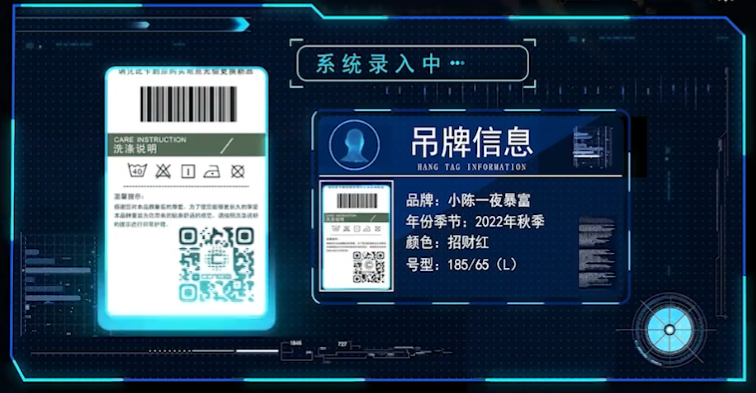
Clothing warehousing involves multi-dimensional information such as style, color, size and batch. Traditional management methods are prone to errors in manual entry, resulting in wrong or missed shipments of goods. The one-product-one-code system binds the attributes of goods with unique codes through "item-level" digital tags: when goods are put into storage, scan the code to associate the information of the goods, and the system will automatically allocate storage locations. The inventory quantity and location are monitored in real time during the storage stage. When goods are dispatched from the warehouse, scan the code to verify the matching degree of the goods and ensure that "the order and the goods are consistent". This precise control of "one item, one code, one location" can raise the inventory accuracy rate to the leading level in the industry, reduce returns and customer complaints caused by mismatched goods, and at the same time lower the cost of manual inventory checks.
Dynamic scheduling: Optimizing the allocation of warehouse resources driven by data
Clothing sales have strong seasonality and trend sensitivity. Brands need to frequently adjust the distribution of goods to match the regional market demand. The one-product-one-code system provides decision-making basis for warehouse scheduling through real-time data collection and analysis: the system can track indicators such as the turnover rate of goods and the proportion of slow-moving items in each warehouse, and automatically generate allocation suggestions. Based on the sales forecast data, potential goods are allocated to the target regional warehouses in advance to shorten the order fulfillment cycle. In addition, the system supports data integration with e-commerce platforms and offline stores, achieving a collaborative model of "online orders - nearby warehouses - express delivery", which not only enhances the shopping experience of consumers but also optimizes the utilization rate of warehouse space.
Anti-counterfeiting and traceability: Building a trust barrier in the brand supply chain
The problem of rampant counterfeit goods and unauthorized distribution in the clothing industry has long plagued brand owners, not only infringing upon consumers' rights and interests but also eroding brand value. The one-product-one-code system, through the "code-chain integration" technology, establishes a full life cycle traceability chain for each item: from production batches, quality inspection reports to storage and circulation records, all information is recorded on the chain for evidence, ensuring that the source of the goods can be traced and their destination can be tracked. Brands can quickly locate the sources of counterfeit goods based on the system, and verify the authenticity by scanning the code to block the circulation of fake goods. Consumers can scan the code to view the "digital passport" of the product, enhancing their trust in the brand's guarantee of authenticity. This dual guarantee of "technical anti-counterfeiting + data traceability" can effectively maintain the market order of the brand and enhance the compliance willingness of channel partners.
Conclusion: Digital warehousing is the "infrastructure" for the transformation of clothing brands.
In the current era of fragmented consumer demand and fierce supply chain competition, the one-code-per-item warehouse management system for clothing has been upgraded from an "efficiency tool" to a "strategic asset". It can not only help brands solve practical problems such as inventory overstock, misallocation and loss, but also provide support for flexible production and precise marketing through the accumulation of data assets, helping brands shift from "scale expansion" to "value deepening".