






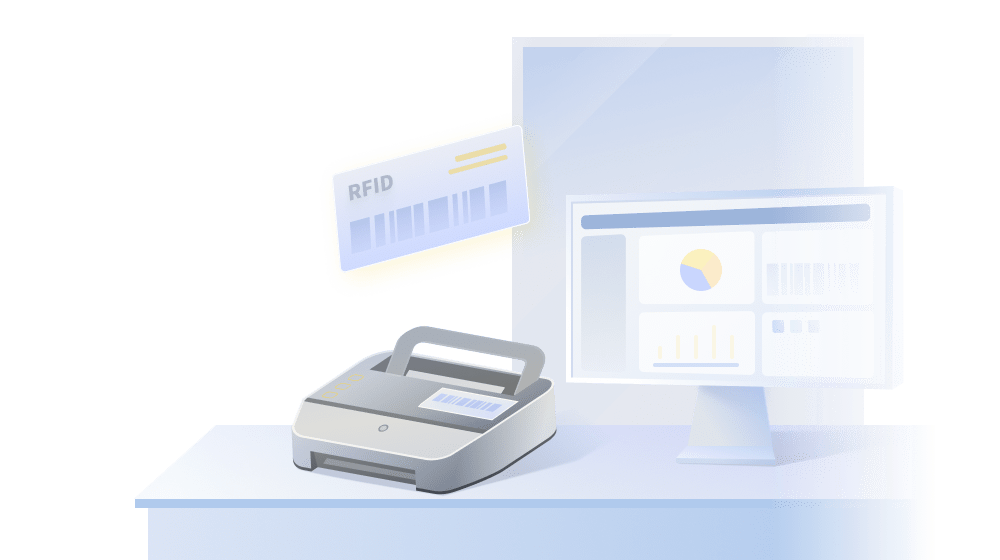


CCN RFID Fixed Asset Management Platform
A new-generation enterprise asset management platform that supports the digital management of the entire lifecycle of fixed assets.
-
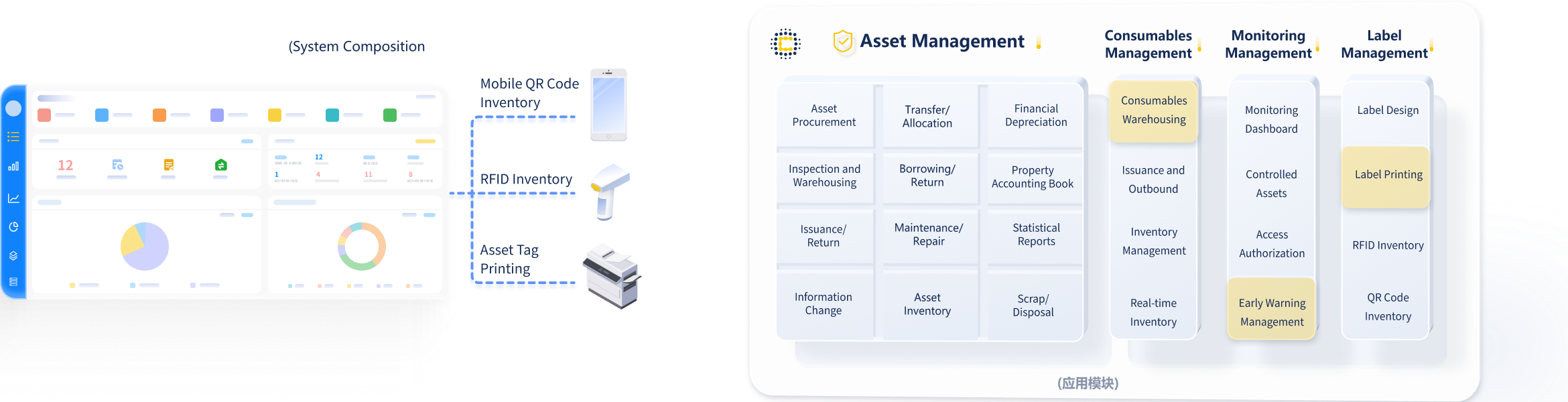
Asset Information Management
-
Asset Dynamic Management
-
Inventory Management
-
Report Management
-
Asset Information Management
By binding RFID tags to fixed assets as unique identifiers, asset information can be acquired through RFID handheld scanning. The system enables the registration and management of basic fixed asset information, allowing for operations such as adding, modifying, deleting, and querying asset details.

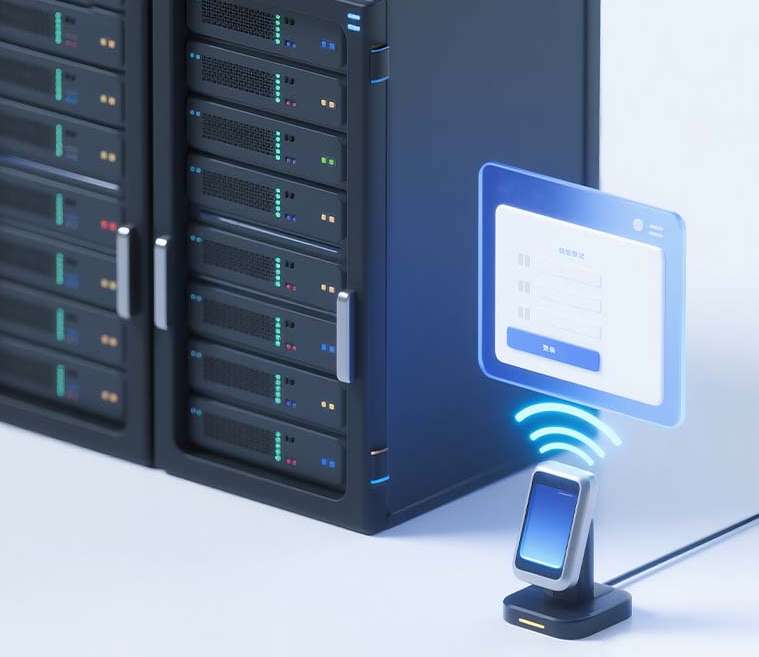







Application Value of RFID Asset Management Platform
This fully digital asset management platform is suitable for numerous industries such as large state-owned enterprises, government agencies, administrative units, real estate, finance, manufacturing, healthcare, hospitality, education, IT, and the internet. It creates significant value for businesses by:
-
Enhancing refined asset management:
Unifying asset ledgers, rules, coding, and process standards to standardize asset management and improve its precision.

-
Achieving full lifecycle asset management
Implementing "one item, one person, one code" to track operations with real-time records, effective traceability, and clear accountability, ensuring zero loss of assets.

-
Reducing inventory costs and errors
Utilizing RFID technology for mobile inventory, instant scanning, accurate reporting, and deviation-free remote inventory checks, thereby improving inventory efficiency and accuracy.

-
Integrating asset records with physical assets
Linking with financial systems to ensure alignment between financial accounts and physical assets, achieving consistency in corporate asset records.

-
Improving asset utilization efficiency
Building an enterprise asset portrait with multi-dimensional reports for real-time oversight of asset status. This provides a reliable basis for asset evaluation and decision-making, enables effective reallocation of idle assets, and enhances utilization efficiency.

RFID Asset Management vs. Traditional Manual Management
Example: A medium-sized enterprise with assets worth billions and 20,000 fixed assets under management
-
ComparisonTraditional Asset Management
-
Timeliness and Accuracy of Asset Data:Manual registration, low efficiency with error rates
-
Inventory Efficiency8–10 people × 30 days/time
-
Report AnalysisManual statistics with long cycles
-
Asset VisualizationManual tracking of asset history
-
Process OptimizationManual approval with lengthy cycles
-
Asset UtilizationUnclear asset status leading to redundant purchases, idle assets, or losses
-
ComparisonRFID Asset Management
-
Timeliness and Accuracy of Asset Data:Automatically transmitted to the backend system
-
Inventory Efficiency3–4 people × 3–5 days/time
-
Report AnalysisAutomatically generated reports by asset category, department, etc., without manual intervention.
-
Asset VisualizationSystem automatically generates asset trajectories.
-
Process Optimizationystem remote reminders, improving manual efficiency by 60%–80%
-
Asset UtilizationSystem clearly tracks asset status, improves utilization, and reduces redundant equipment investment.