







Jing Brand
B2C Linkage & Precision Marketing
Jing Brand Company partnered with CCN to implement a dual-focused digital marketing strategy through B2C linkage. This approach breaks through the traditional limitations of liquor industry channels, accelerates the upgrade of Jing Brand's product marketing channels, and enhances control over channel information by leveraging "code" empowerment. It supports Jing Brand in becoming a benchmark for digital transformation within the liquor industry.
Since its launch in 2013, Mao Pu Wine has experienced rapid growth over the past decade, particularly building a broad consumer base in the Hubei market. Jing Brand's flagship product, Jing Wine, has been deeply cultivated in the national market for many years and boasts a solid foundation in market channels, with quality always being Jing Brand's core strength. So, how can brand heritage be integrated with the diversified marketing strategies of the digital marketing era? How can the essence of traditional culture be expressed in a modern way? Jing Brand has delivered a perfect answer.
ALWAYS MAKE MORE
About Jing Brand
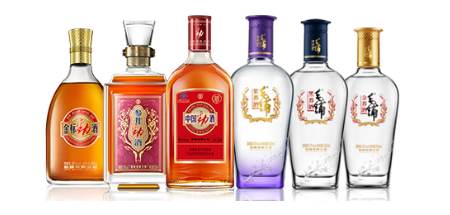
In 1953, Jing Brand Company was founded in Daye, Hubei Province, known as the "Hometown of Bronze." After nearly seventy years of steady development, it has now grown into a specialized health product enterprise.
Currently, the company operates three major brand businesses: China Jing Wine, Mao Pu Wine, and Chi Zheng Tang. China Jing Wine has achieved full coverage in the domestic market and is also exported to over 20 countries and regions, including South Korea, Japan, and Europe.
B2B Store Precision Operations & Channel Management Upgrade
Leveraging CCN's one-item-one-code technology, Jing Brand Company assigns codes to entire product cases. Stores can scan the case codes to receive rewards, thereby increasing their enthusiasm for stocking and case opening rates.
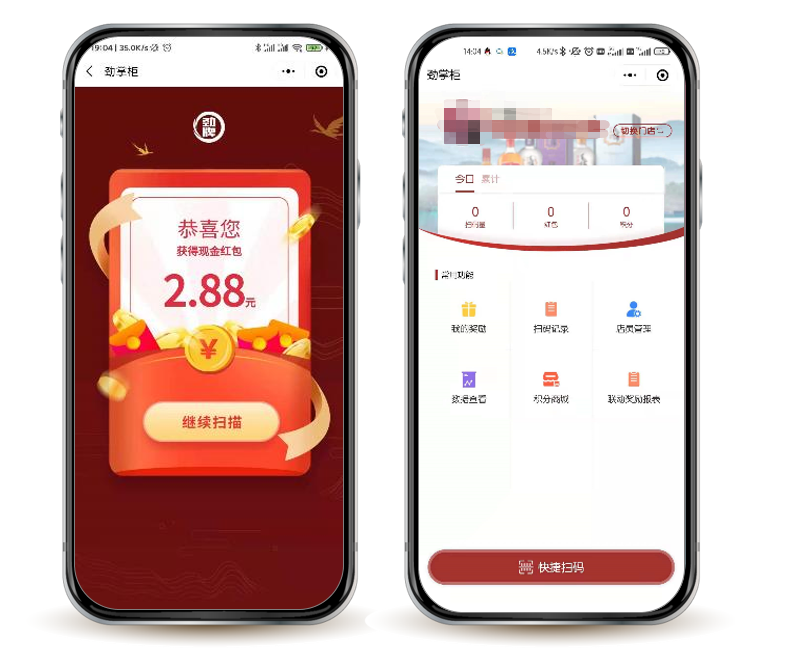
Additionally, the case codes are linked to bottle cap codes, tying store benefits directly to sales performance. When consumers purchase products and scan the bottle cap codes to win prizes, the stores also receive rewards for each opened bottle. This interest-driven approach motivates stores to boost sales efforts and enhance product turnover rates.
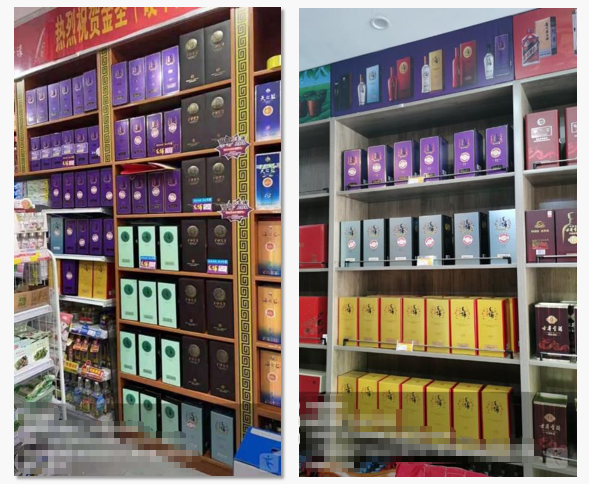
The store marketing strategy utilizes one-item-one-code technology to create a "thousand stores, thousand strategies" operational model. Based on labels such as product types, regional distribution, code-scanning patterns, and time dimensions across different areas, precision marketing is implemented.
C-End Deep Interaction, Private Domain Integration & Precision Marketing
Leveraging CCN's one-item-one-code technology, the unique marketing code serves as the core, and reward-based interactive marketing acts as the engine to attract consumers. This helps brands achieve the goals of "increasing sales, multiplying fan engagement, and reducing marketing costs," thereby enhancing the ROI of marketing campaigns.
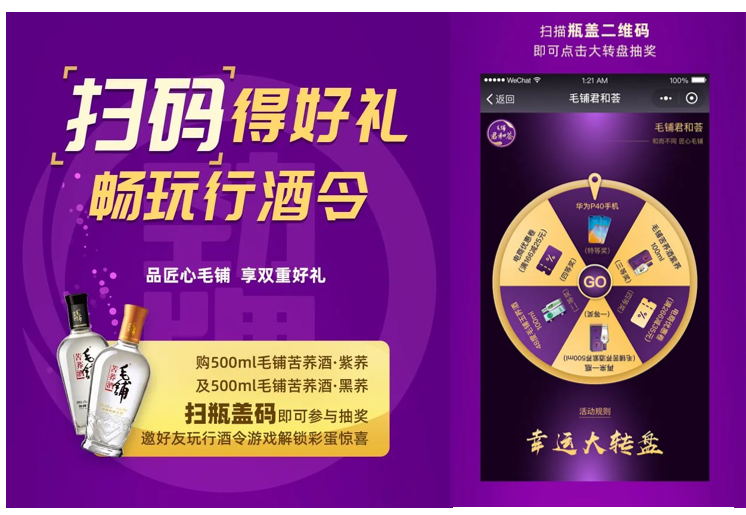
One-item-one-code technology enables brands to seamlessly implement the three key steps: "open, scan, and claim rewards," all in one go. Simple and convenient scanning operations, a 100% overall winning rate, and attractive prizes successfully boost consumers' willingness to purchase products.
Furthermore, to strengthen engagement with consumers, Jing Brand has established an integrated points mall system encompassing cultural elements, interactive features, shopping functions, and membership benefits. Consumers can earn points to redeem rewards by inviting friends, completing personal information, scanning codes after purchasing products, or participating in interactive games.
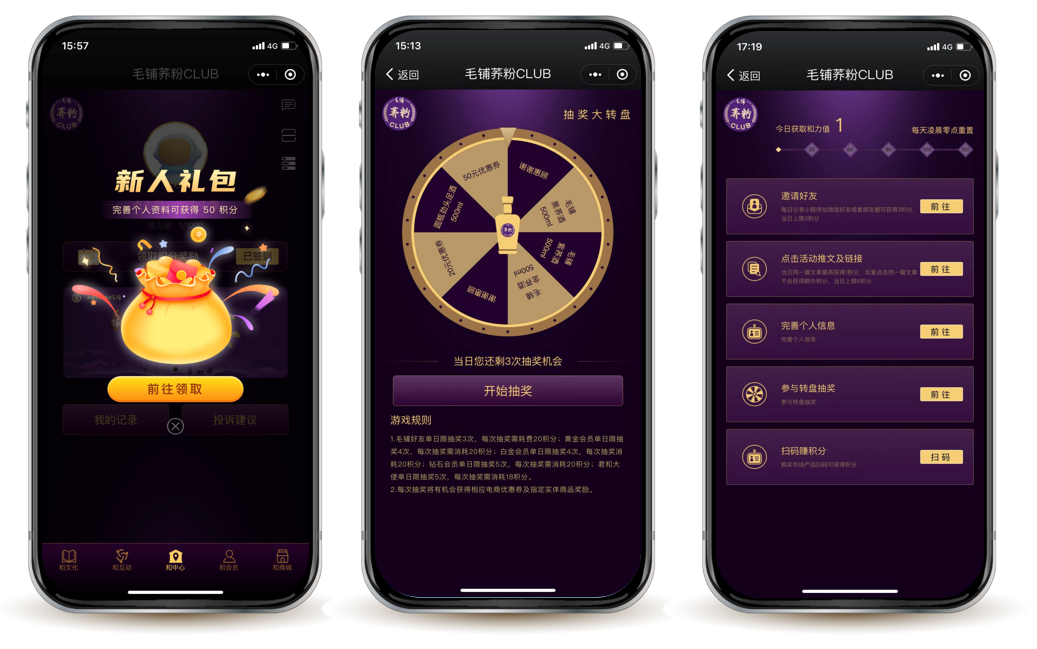
With the help of one-item-one-code technology, consumer scanning paths are made transparent, allowing for clear profiling of core consumers. This enables precise targeting, facilitates consumer identification and deep value mining, and helps regional markets capture and engage with the right consumers through loyalty-focused operations.
BC Collaboration for Comprehensive Cross-Region Sales Monitoring
Furthermore, whether it's case scanning by small B-end partners or bottle cap scanning by C-end consumers, CCN's data backend, powered by one-item-one-code technology, can monitor in real-time whether cross-region sales occur by collecting and analyzing scan data. This helps regional markets quickly and accurately identify and manage terminals suspected of engaging in cross-region sales, thereby enhancing the health of channel markets and boosting operational confidence and positive momentum. Simultaneously, it enables liquor companies to move away from inefficient, offline inspection-based channel control methods.
By partnering with CCN, Jing Brand has broken down the information silos between manufacturers, distributors, stores, and customers. Centered on the "code," they have established an interconnected system focused on information flow. Additionally, by leveraging a BC-linked marketing strategy, they have mobilized the promotional efforts of B-end channels and combined them with the sales momentum generated by C-end consumers, creating a synergistic force.
Thus, digitalization has established a new liquor ecosystem that aligns with industry trends. It enables precise aggregation of regional resources, accurate interaction of data and information, and targeted marketing of branded products, fostering open and shared channels and ensuring efficient resource monetization.

More Customer Case Studies
-

 Valeo
Valeo
Brand Anti-Counterfeiting & Key Channel Partner Marketing-
#One of the world's leading automotive suppliers
-
-
 Jing Brand
B2C Linkage & Precision Marketing-
#China's Leading Health Wine Brand
-
-

 Meixue Ice City
-
#Leading brand in the new tea beverage industry
-
-

 Victor
Copyright Protection-
#Leading Secondary English Education Book Brand
-
-
 博集天卷
博集天卷
一书一码-
#国内书业领军企业之一
-
-
 斯帝卡
斯帝卡
数字化防伪-
#全球知名体育用品品牌
-